Raleigh Casino Apps Real Money: The Geolocation Firewall Reality
Your phone's GPS chip is the single most hostile piece of hardware standing between you and a legal real-money wager in Raleigh — and most players have zero clue how brutally unforgiving that geofence actually is. North Carolina's tribal gaming framework does not care that you are twenty minutes from a reservation; it cares about polygon boundaries accurate to within a few dozen meters. Miss by a parking lot, and your session dies mid-spin.
Let me be blunt: the Raleigh Casino Apps Real Money market is not a free-for-all. It is a tightly fenced corridor carved out around the Eastern Band of Cherokee Indians' two Harrah's properties out west, plus the Catawba Two Kings footprint near Kings Mountain. The state's 2023 compact expansion opened the door for North Carolina Tribal operators to push mobile skins, but the geolocation layer is where the real engineering war is fought. 🎯
Why Your Raleigh GPS Ping Gets Rejected
Here is the ugly truth about location verification in dense urban zones: Wi-Fi triangulation lies. Downtown Raleigh is a canyon of access points, and hybrid location stacks will happily blend a stale SSID scan with a weak cell tower fix. A legit sportsbook engine queries multiple sources — GPS satellite, carrier-assisted A-GPS, and IP geolocation — then runs a confidence-weighted consensus. If your device reports one coordinate inside the permitted tribal polygon and another two hundred meters outside, the kill switch fires instantly.

The apps that survive this gauntlet are the ones pairing hardened native SDKs with aggressive anti-spoofing. Rooted Android devices, jailbroken iOS builds, mock-location developer flags, and even a stray VPN tunnel will trip the integrity check before the geofence even resolves. I have watched players sideload a GPS faker, get one clean login, and then eat a permanent account flag within forty-eight hours. The North Carolina Tribal compliance stack logs every location packet — timestamped, hashed, and retained. Do not test it.
Payment Rails Inside the Tribal Corridor
Real-money flow in this environment is not the Wild West. Deposits route through ACH, Play+ style prepaid vouchers, and card processors that have explicitly signed off on tribal gaming merchant codes. The catch nobody advertises: withdrawal velocity. A Raleigh player can fund in ninety seconds but wait three to five business days for a payout, because the tribal operator's KYC tiering gates first-time cash-outs behind manual review. Rush a large withdrawal and you land in the enhanced due-diligence queue, where a compliance analyst eyeballs your play history for bonus abuse patterns.
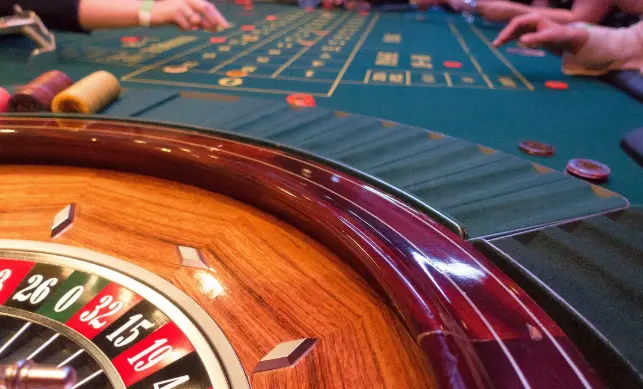
Session integrity matters too. Most of these Raleigh Casino Apps Real Money clients enforce idle timeouts as short as fifteen minutes, and any background-thread location re-check that fails will void an in-progress hand. My advice: lock the app in the foreground, kill battery optimizers, disable any "smart location" OS feature, and run on a clean, unrooted device with high GPS accuracy enabled. 🛰️
Latency, RNG Certification, and the Audit Trail
The tribal operators run certified RNG cores audited by independent testing labs, with server-side seed rotation and published return-to-player bands. What is not published is the latency budget for geolocation re-validation during live dealer or in-play betting. Every handshake between your handset and the game server carries a location token; if that token ages past its TTL mid-bet, the wager is rejected server-side even after your screen shows a confirmed stake. That mismatch — visual confirmation versus backend rejection — is the number one source of player disputes I see in this market, and it always traces back to a location token expiring against a congested cellular handoff on the I-440 beltline.
Keep your firmware current, stay off public Wi-Fi near the downtown core, and treat every permission prompt as a compliance gate rather than a nuisance. The hardware does not negotiate.